

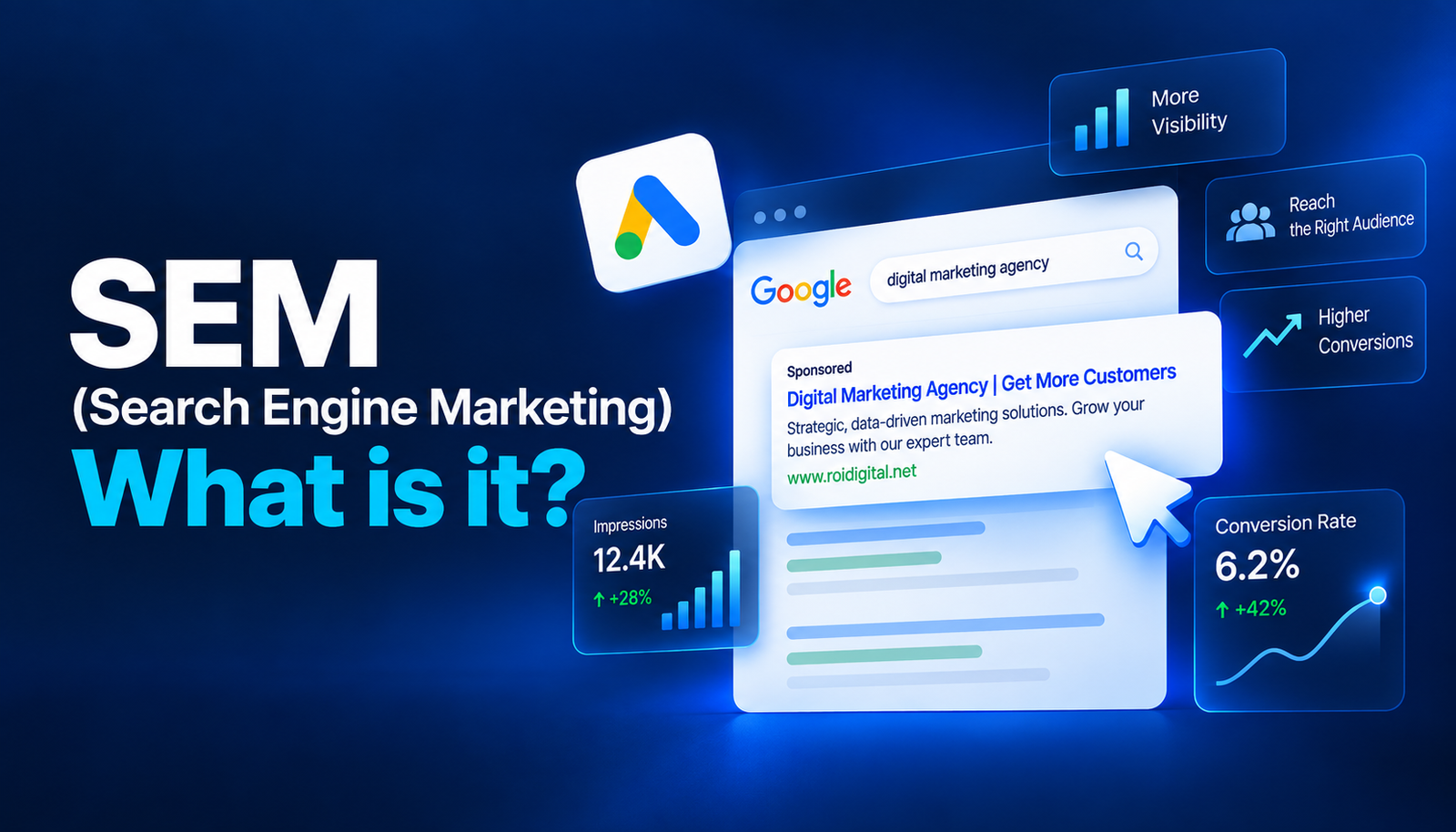

SEM, or Search Engine Marketing, is a digital marketing method that helps brands gain visibility on search engines through paid advertising. Often referred to as search engine marketing, SEM is primarily used on platforms such as Google Ads to display ads for specific keywords, reach potential customers, and generate measurable conversions.
SEM allows brands to appear in front of users at the exact moment they are actively searching for a product, service, or solution. This is one of the key differences between SEM and social media advertising. Because users already have a specific search intent, well-structured SEM campaigns can reach audiences with strong purchase intent.
SEM is not simply about running ads. Keyword selection, ad copy, landing pages, budget management, bidding strategies, conversion tracking, and campaign optimization should all be managed together.
Why Is SEM (Search Engine Marketing) Important for Brands?
Search engines are among the first channels users turn to when researching products and services. When a user searches for a specific need on Google, a brand’s visibility for that query can directly influence sales opportunities.
SEM gives brands the advantage of gaining visibility quickly. While SEO is a long-term investment in organic visibility, properly structured SEM campaigns can generate traffic and conversions in a shorter period of time.
In highly competitive industries, relying only on organic rankings may not be enough. SEM allows brands to appear in paid placements for strategic keywords and compete for visibility on the same search results pages as their competitors.
Another major advantage is measurability. Advertisers can track which keywords generate clicks, which ads produce conversions, and how much revenue is generated from a specific advertising budget.
What Is SEM Used For?
SEM helps brands gain paid visibility in search engine results and achieve specific marketing objectives.
Common use cases include driving traffic to a website, increasing product or service sales, generating form submissions and quote requests, receiving phone calls, and promoting specific campaigns.
In e-commerce, SEM can direct users straight to product or category pages. For service businesses, it can guide users to a quote form or contact page.
One of the important advantages of SEM is the ability to serve ads according to different types of user intent. For example, someone looking for information does not necessarily need to be targeted in the same way as someone who is ready to buy.
For this reason, SEM should focus not only on generating more traffic, but also on attracting more qualified traffic.
How Does SEM Work?
SEM generally works through a process involving user searches, keyword matching, ad auctions, and ad delivery.
When a user performs a search on Google, the system evaluates advertisers that are relevant to that query. Factors such as the advertiser’s bid, ad quality, landing page experience, and other quality signals are considered to determine which ads are displayed.
When creating campaigns, brands choose the keywords they want to target. For example, ad groups can be created around searches such as Shopify consulting, Google Ads agency, or web design services.
After an ad is displayed, users who click it are directed to the relevant landing page. On that page, they may complete a target action such as filling out a form, making a purchase, or contacting the business.
In a successful SEM campaign, choosing the right keywords is not enough. There should also be strong consistency between the advertising message and the content of the landing page.
What Are the Advantages of SEM?
SEM is an important performance marketing tool because it can provide brands with visibility in a relatively short period of time.
One of its main advantages is the ability to target high-intent users. If someone is actively searching for a specific product or service, the potential for conversion may be higher.
SEM also provides strong budget control. Daily budgets, cost-per-click limits, and campaign spending limits can be defined.
Another advantage is detailed measurement. Advertising spend, cost per click, conversion rate, and advertising revenue can all be analyzed.
Campaigns can also be tested quickly. Different ad copy, landing pages, and bidding strategies can be compared to identify which setup performs better.
SEM can be particularly useful for generating traffic quickly when launching a new brand, service, or product.
What Are the Different Types of SEM Campaigns?
SEM is not limited to a single campaign type. Different campaign structures can be used depending on the objective and user behavior.
Search campaigns display text ads based on the searches users perform on Google. This campaign type is especially suitable for targeting users with strong search intent.
Shopping campaigns help e-commerce brands display products together with images, prices, and store information. Google Merchant Center integration plays an important role in these campaigns.
Performance Max campaigns can serve ads across multiple Google advertising channels from a single campaign. Traffic can come from Search, YouTube, Display, Discover, and other placements.
Display campaigns are commonly used for awareness and remarketing through visual banner ads.
Video campaigns can be used primarily on YouTube for brand awareness or product promotion.
Remarketing campaigns allow brands to target users who have previously visited their website.
When choosing a campaign type, businesses should focus not only on the options available on the platform, but also on their own objectives and the user’s journey.
How Is SEM Performance Measured?
SEM performance should not be evaluated only by the number of clicks.
Cost per click is an important metric, but a low CPC does not always mean strong performance. If low-cost traffic does not generate conversions, the campaign may still be inefficient.
Conversion rate shows what percentage of users who clicked the ad completed the desired action.
Customer acquisition cost helps determine how much advertising spend is required to acquire one customer.
ROAS measures how much revenue is generated for each unit of advertising spend and is especially common in e-commerce campaigns.
Search term reports are also important for performance analysis. By reviewing the actual queries users typed before clicking an ad, irrelevant searches can be added as negative keywords.
When evaluating SEM success, campaign data, sales performance, and overall business objectives should all be considered together.
Does SEM Improve SEO?
SEM and SEO are different systems. SEM provides paid visibility, while SEO focuses on organic rankings.
Running a Google Ads campaign does not directly improve organic rankings. Paying for ads does not cause a page to rank higher in organic search results.
However, SEM and SEO can work together as part of a broader search strategy.
Search term data from SEM campaigns can help identify which keywords generate conversions. These insights may be useful when planning SEO content.
Similarly, keywords that already perform strongly in organic search can support SEM campaign strategies.
SEM can provide short-term visibility and conversions, while SEO can build longer-term organic traffic. For this reason, the two channels should be viewed as complementary rather than as alternatives.
Tools You Can Use for SEM
Different tools can be used to plan, manage, and analyze SEM campaigns.
Google Ads is one of the core platforms used for search engine marketing. Keyword targeting, campaign management, bidding strategies, and conversion tracking can all be managed within the platform.
Google Keyword Planner can be used to discover new keywords and get an idea of estimated search volumes.
Google Analytics 4 helps analyze how users coming from advertising campaigns behave on the website.
Google Tag Manager can be used to set up conversion and event tracking.
Google Merchant Center allows e-commerce brands to provide product data to Google for Shopping and other product-based campaigns.
Search Console is not directly an SEM tool, but it can be useful when comparing organic search data with paid campaign results.
Third-party SEO and advertising analysis tools can also be used to review competitor keywords, ad visibility, and search trends.
The most important point is not to use as many tools as possible, but to analyze the right data for the right purpose. The success of SEM campaigns depends more on the quality of the campaign strategy and measurement setup than on the number of tools being used.