

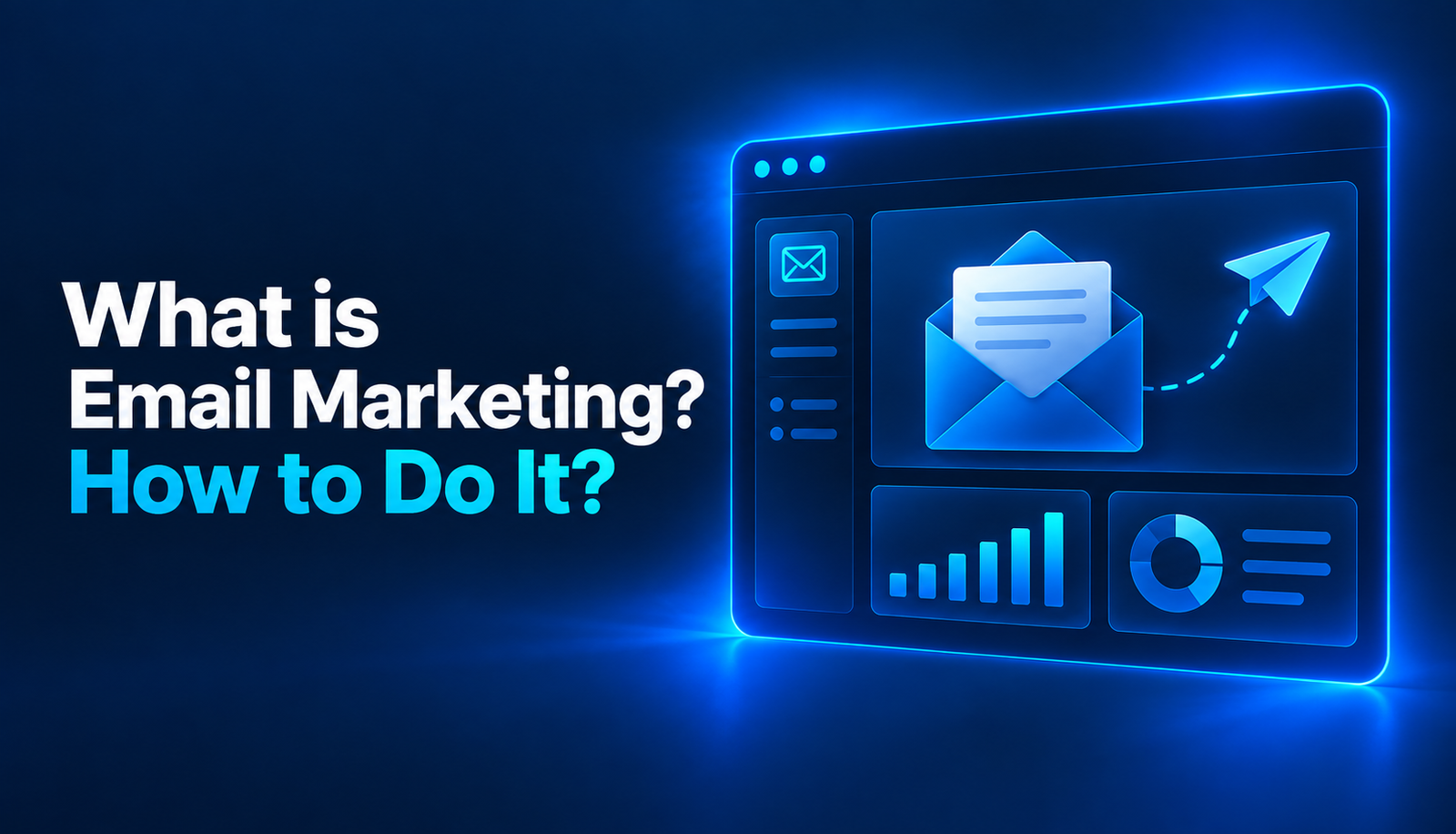

Email marketing is one of the digital marketing methods that allows brands to communicate directly with potential and existing customers. Campaigns, new product announcements, content, discounts, and personalized offers can be delivered to the right audiences through email.
Especially for e-commerce websites, email marketing is not used only to announce campaigns. It can also be used to welcome new customers, remind users about abandoned carts, encourage repeat purchases, and maintain relationships with existing customers.
The goal of a successful email marketing strategy is not to send as many emails as possible. The key is to deliver the right message to the right user at the right time.
What Is Email Marketing?
Email marketing is a marketing method that allows businesses to promote their products, services, or content by sending emails to permission-based subscriber lists.
This communication can take different forms, from one-time campaigns to automated customer journeys. A user may receive a welcome email when they first sign up, an abandoned cart reminder if they add a product to their cart but do not complete the purchase, or personalized product recommendations based on previous purchases.
One of the main advantages of email marketing is that it allows brands to reach customers directly. While reach on social media and advertising platforms may depend on algorithms and advertising budgets, an email list is a communication channel built and owned by the business.
However, for this channel to be effective, user consent must be collected properly, sending frequency should be balanced, and content should be personalized.
How Is Email Marketing Done?
Email marketing typically involves stages such as goal setting, list building, segmentation, content creation, automation, and performance analysis.
The first step is to determine why the emails are being sent. The goal may be to encourage first-time purchases from new customers, support repeat purchases from existing customers, or drive traffic to a specific campaign.
Users can then be segmented according to their behavior and characteristics. This makes it possible to send more relevant content instead of sending the same message to everyone.
Define Your Target Audience and Goals
The first step in email marketing is to define who your target audience is and what result you want the campaign to achieve.
New subscribers, first-time customers, regular customers, and users who have not purchased for a long time should not all receive the same message.
For example, a new subscriber may receive a welcome series introducing the brand, while a customer who has already made several purchases may receive recommendations for complementary products.
The objective should also be as clear as possible. Goals such as increasing sales, encouraging repeat purchases, recovering abandoned carts, or announcing a campaign require different strategies.
Choose an Email Marketing Tool
The tool you choose can directly affect how easily your email marketing activities can be managed.
For stores using Shopify, one of the biggest advantages is the ability to integrate the email system with store data. Customer information, order history, product-viewing behavior, and shopping data can all be used for email segmentation.
Within the Shopify ecosystem, solutions such as Shopify Email can be used, while tools like Klaviyo may be preferred for more advanced segmentation and automation.
When choosing a platform, you should not focus only on the ability to send emails. Features such as segmentation, automation, reporting, A/B testing, product recommendations, and Shopify integration should also be evaluated.
A small or newly launched store may start with a simpler system, while advanced automation and customer segmentation become more important for brands with higher order volumes.
Build Your Email Marketing Flow
An email marketing flow defines which message a user receives after a specific behavior or action.
For example, when a new user joins an email list, instead of immediately sending a sales-focused message, you could first introduce the brand, then recommend products, and later send promotional content.
In an abandoned cart flow, the first reminder can be sent a certain period of time after the user adds a product to their cart. If the purchase is still not completed, a second email may highlight product benefits or delivery information.
Post-purchase flows can include product usage recommendations, complementary products, or reminders when it may be time to repurchase.
A good flow adapts to user behavior. Sending every user the same message at the same frequency can reduce engagement over time.
What Are the Different Types of Email Marketing?
Email marketing can be used in different formats depending on the objective.
Some emails focus on sales, some provide informational content, while others are designed to build a long-term relationship with the user.
Welcome Emails
Welcome emails are the first messages users receive after joining an email list.
These emails can introduce the brand, highlight product categories, and offer a relevant incentive for the user’s first purchase.
A welcome series consisting of several emails may be more effective than sending a single message.
The first email can introduce the brand, the second can highlight featured products, and a later email can encourage the user to make a purchase.
Email Newsletters
Email newsletters are informational messages sent on a regular basis.
New blog posts, product guides, seasonal content, and brand news can be shared in this format.
Newsletters do not need to focus on direct sales in every send. Sharing useful content can help maintain ongoing communication between the brand and the customer.
For example, a fashion brand may send seasonal outfit ideas, a cosmetics store may share skincare routines, or a sports store may provide product selection guides.
Promotional Offer Emails
Promotional offer emails can be used to provide special benefits to a specific customer segment.
Free shipping, discounts on selected products, or exclusive pricing for certain customer groups are examples of such offers.
For these emails to be effective, the offer should be sent to a genuinely relevant audience.
For example, it may be more meaningful to send a special offer for a product category to users who have previously shown interest in that category.
Announcement Emails
Announcement emails are used to communicate new products, store updates, or important brand developments.
A new collection, a new store opening, or a major service update can be announced through this format.
The message should be clear and concise. Users should be able to understand what is being announced as soon as they open the email.
Campaign Emails
Campaign emails are seasonal or time-sensitive messages designed to increase sales.
End-of-season sales, Black Friday, special occasions, or inventory clearance campaigns can all fall into this category.
Campaign terms, dates, and eligible products should be explained clearly.
Sending emails too frequently during promotional periods may generate short-term sales but can increase unsubscribe rates over time. For this reason, frequency should be managed carefully.
Email Marketing Examples
In Shopify stores, email marketing flows can be built in considerable detail based on customer behavior.
For example, if a customer views a dress but does not make a purchase, the same product or similar styles can later be recommended by email.
Automated abandoned cart emails can be created for users who add products to their carts but do not complete checkout. The first email may remind the user about the product, while a second message can highlight stock availability or delivery benefits.
A first-time customer may receive product usage tips a few days after their purchase. Later, similar or complementary products can be recommended to encourage a second order.
If the typical repurchase cycle of certain products can be estimated, automated replenishment emails can also be used. For example, with cosmetics or personal care products, users can receive repurchase reminders around the time the product is likely to run out.
Shopify customer segments can also be used to create special campaigns for high-spending customers.
This approach turns email marketing from a simple mass communication tool into an integrated part of the customer lifecycle.
What Are the Advantages of Email Marketing?
One of the main advantages of email marketing is the ability to communicate directly with an existing customer base.
Because the user has already interacted with the brand, they are more likely to recognize it than a completely new user.
Email can also be personalized according to user behavior. Instead of showing the same products to everyone, different recommendations can be made based on previous purchases or interests.
With automation, many communication processes can run without requiring manual work.
Welcome, abandoned cart, repeat purchase, and customer reactivation flows can be triggered automatically based on predefined conditions.
Email marketing is also a measurable channel. Metrics such as open rate, click-through rate, conversion rate, and email-generated revenue can be tracked.
These data points can help identify which messages and campaigns perform best.
How Can You Benefit from Email Marketing for Your E-Commerce Website?
To get the most value from email marketing for an e-commerce website, the first step is to create a list growth strategy.
When asking users for their email addresses, it should be clearly explained why they should subscribe. Campaign information, new product announcements, or exclusive benefits can provide a real reason to join the list.
The second step is to segment users based on their behavior.
New users, active customers, high-spending customers, and users who have not purchased for a long time can all be evaluated as separate groups.
Abandoned cart automation is one of the most valuable flows in e-commerce. Users who came close to completing a purchase can be reminded to return to the store.
Post-purchase communication is also important. Instead of sending only an order confirmation, brands can provide usage recommendations, complementary products, and relevant content.
In Shopify stores, integrating product and customer data with the email platform can strengthen personalization. This allows users to receive recommendations based on products they previously viewed or their purchase history.
Email performance should be analyzed regularly. If open rates are high but click-through rates are low, the content or offer may be weak. If clicks are high but sales remain low, the product page or offer structure may need to be reviewed.
For this reason, email marketing should not be treated as an isolated channel. It should be considered together with the Shopify store, product pages, advertising campaigns, and conversion optimization. A well-structured system can help generate more value from existing customers and increase customer lifetime value.