


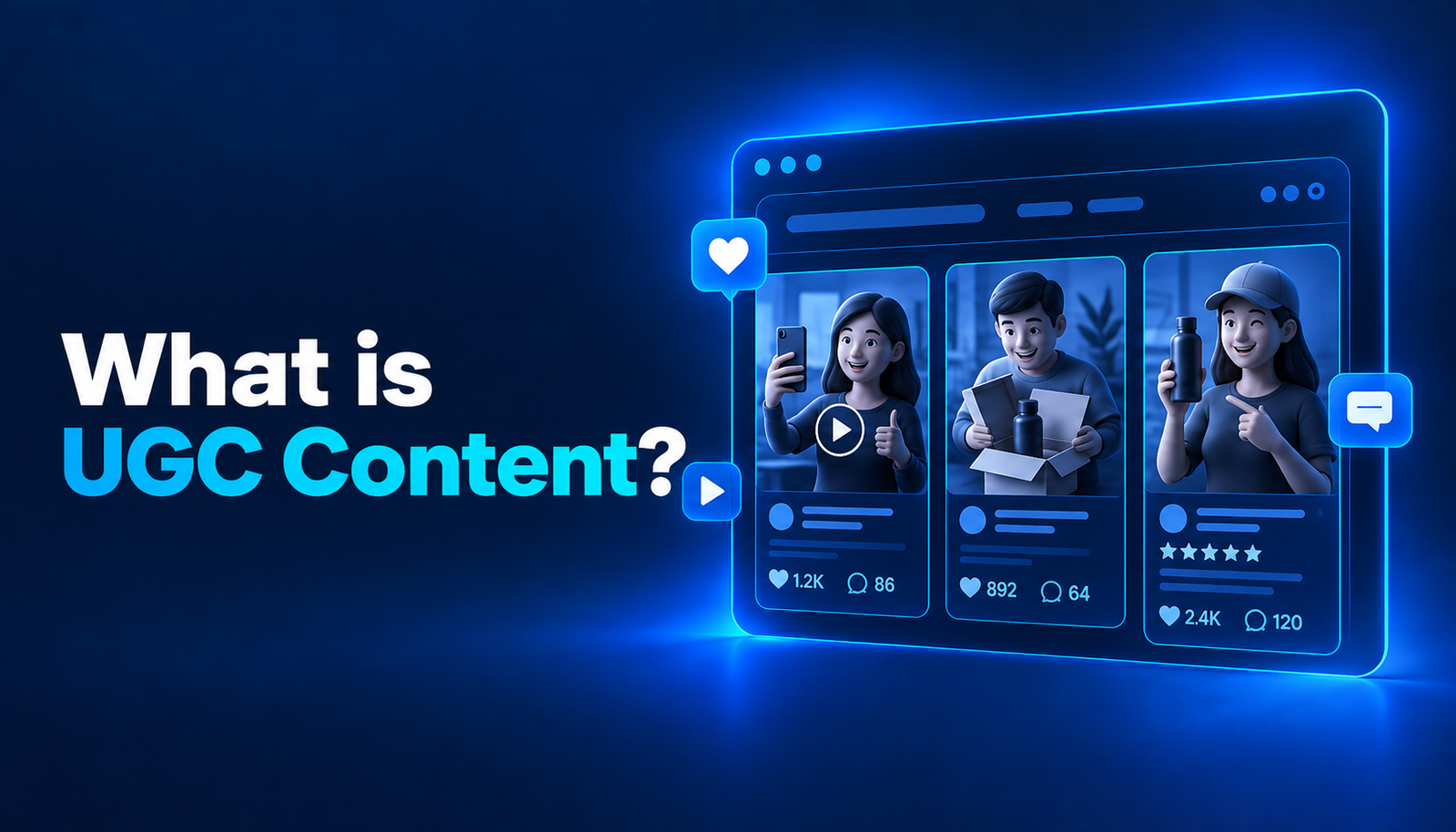

UGC refers to content created by users based on their own experiences with a brand, product, or service. Short for User-Generated Content, UGC can appear in the form of social media posts, product reviews, videos, photos, ratings, and various types of customer experiences.
The main difference between UGC and a brand’s own corporate communication is that UGC is shaped by the user experience. A video showing a customer using a purchased product, a product review, or a photo shared on social media can all be considered UGC.
In digital marketing, seeing real user experiences can directly influence the decision-making process of potential customers. Especially for e-commerce and social media-focused brands, user-generated content has become an important source of content because it shows how a product is used in real life and complements traditional advertising materials.
UGC does not consist only of organic user posts. Brands can encourage users to create content, organize campaigns, or work with content creators to produce natural-looking UGC-style content. The important point is that the content should feel more like a real user experience than a traditional brand advertisement.

What Formats Can UGC Take?
UGC can appear in different formats depending on the platform and the way users share their experiences.
Social media videos are among the most common UGC formats. Users may try a product, create an unboxing video, demonstrate how they use it, or share a short review.
Photo content is also widely used, especially in visually driven industries such as fashion, cosmetics, home decor, and travel. Showing a product in a real-life environment allows potential customers to evaluate it differently from professional studio photography.
Product reviews and ratings also play an important role in UGC. On e-commerce websites, customer reviews can influence the purchasing decisions of potential buyers.
Blog posts, forum discussions, experiences shared on Q&A platforms, and independent reviews about a brand can also be considered user-generated content.
Common UGC formats include:
- Social media videos and photos
- Product reviews
- User ratings
- Unboxing videos
- Product usage videos
- Before-and-after content
- Blog and forum posts
- Social media stories
- Customer experience posts
When selecting formats, brands should consider which platforms their target audience is most active on. Short-form videos may be more effective on platforms such as TikTok and Instagram, while product reviews and customer photos may be more valuable directly on an e-commerce website.
What Is the Difference Between UGC and Other Advertising Content?
The main difference between UGC and traditional advertising content lies in the source and presentation of the content.
In traditional advertising, the message is created by the brand. Product features, benefits, and promotional messages are usually presented using professional advertising language.
In UGC, the product or service is presented through the user experience. The content may feel more natural, casual, and less corporate.
For example, a professional commercial may highlight the technical features of a product and the brand message. A UGC video, on the other hand, may show how the product helps someone in their daily life.
This difference is particularly important in social media advertising. On platforms where users are constantly exposed to polished advertisements, more natural-looking content may have an advantage in attracting attention.
UGC and traditional advertising should not necessarily be seen as alternatives to each other. In many cases, the strongest results come from using professional brand content together with user experience-focused content.
Why Is UGC Important?
The importance of UGC comes from the fact that what customers say about a brand can sometimes influence purchasing decisions more than what the brand says about itself.
Before buying a product, users do not only read the product description. They may also look at other customers’ experiences, reviews, and how the product appears in real-life use.
For this reason, UGC plays an important role not only in content production but also in trust, brand awareness, conversion, and customer experience.
It Builds Trust with the Target Audience
User reviews and real customer experiences can help a brand build trust.
A potential customer may be more cautious when they only see information prepared by the brand. Seeing positive experiences from multiple users about the same product may make the decision process easier.
User experiences can provide especially strong social proof for lesser-known brands.
For UGC to build trust, it should be based on genuine user experiences. Content that feels artificial or overly promotional may reduce this trust effect.
It Can Provide a Cost Advantage
UGC can help brands reduce content production costs.
Instead of creating a large production, studio shoot, or professional video for every advertisement, brands can make use of content created by users.
This can be particularly useful for testing different creatives quickly in social media advertising.
However, UGC does not always mean free content. Working with content creators, obtaining usage rights, and using content for paid advertising can create additional costs.
The advantage is that many natural content formats can often be tested at a lower production cost than one high-budget creative.
It Can Generate Organic Reach and Increase Brand Awareness
When users share content about a brand on social media, blogs, or other platforms, it can help the brand reach a wider audience.
When a customer shares their product experience with their own followers, the brand may become visible to users it would not otherwise reach directly.
As this type of content increases over time, it can strengthen the brand’s overall digital visibility.
User tagging and product-related content can be especially valuable for organic reach on social media.
Brands can also reuse this content on their own social media accounts or other permitted channels to support their content production process.
It Can Support SEO
UGC can contribute both directly and indirectly to SEO efforts.
Customer reviews on e-commerce product pages can help pages continuously gain fresh content. Because users may describe products using different words and phrases, this can help cover a wider range of long-tail search queries.
Q&A sections can also generate content that closely reflects real user search behavior.
Mentions and discussions about a brand on other websites, forums, or content platforms may also increase the brand’s digital visibility.
However, for UGC to provide SEO value, the content should be relevant, high quality, and free from spam.
It Can Influence Purchasing Decisions
UGC can reduce uncertainty during the purchasing process.
Users may want to see how a product looks in real life, how it is used, and what other customers think about it.
For example, real customer photos in fashion can show how a product looks on different body types. In cosmetics, user experiences may provide additional information about application and results.
For electronics, user reviews can offer insight into how a product performs in everyday use.
This information can help potential customers develop more realistic expectations about the product.
What Advantages Does UGC Provide for Brands?
UGC does more than simply give brands more content. It also provides a valuable resource that can be used at different stages of marketing and sales.
One of the most important advantages is social proof. Seeing real customers use a product and share their experiences can strengthen potential customers’ trust in the brand.
UGC also helps diversify advertising creatives. Especially on visual and video-focused platforms such as Meta Ads and TikTok, different types of user content can be tested to identify which style of communication performs best.
Using user-generated content on e-commerce product pages can also support the conversion process. Product reviews, customer photos, and real usage videos can make product pages more informative.
UGC can also help brands build stronger community relationships with their customers. When a brand shares customer-created content, users may feel more involved in the brand’s communication.
In addition, user content can help brands better understand how customers actually use their products. The features users highlight, the problems they mention, and the situations in which they use the product can provide valuable insights for developing new marketing messages.
For a UGC strategy to be successful, content should not be used without control. It is important to obtain the necessary permissions from users, define where the content will be used, and protect brand safety.
When managed properly, UGC can become a powerful digital marketing element that supports brand awareness, trust, advertising performance, SEO, and conversion rates.